Cinque Lune: a trattoria the owner runs from a phone.
Trattoria Cinque Lune is the restaurant I built to show restaurant owners what they’d get before they pay for anything. The guest side is a full site. The owner’s side is the same back office a real restaurant gets, and you can try it.
- What it is
- A demo restaurant, made up, with a working site and back office
- Built with
- Next.js, Supabase and Resend, on Vercel
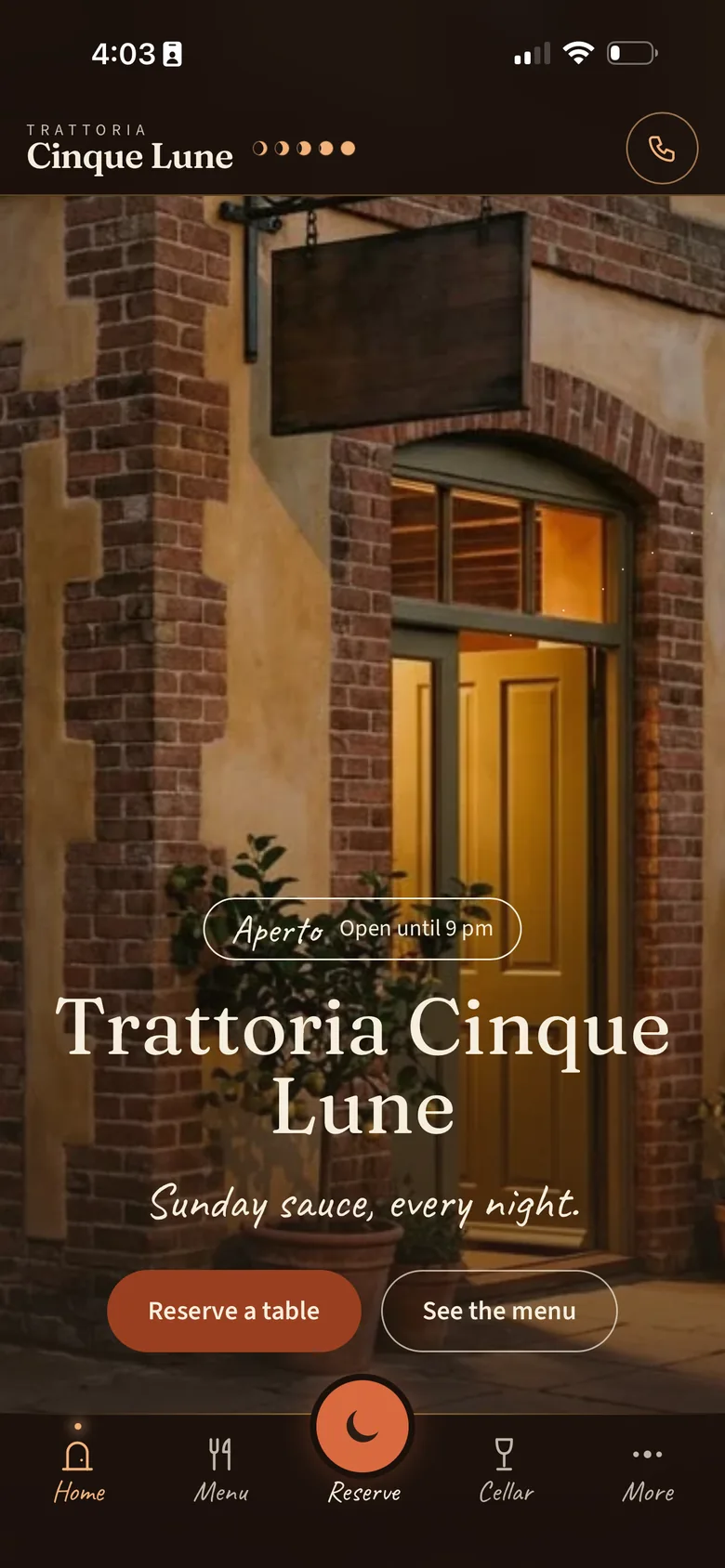
The real demo, running in the phone. Scroll inside it.
Why a demo
A restaurant owner can’t judge a website from a description, and most won’t sign up to find out. So I built a whole restaurant: a name, a room, a menu, a wine list, hours and a story, then the site on top of it and the back office behind it.
It’s labelled as a demo everywhere it appears. Nothing about it is passed off as a real business, and no real restaurant’s food or name is used.
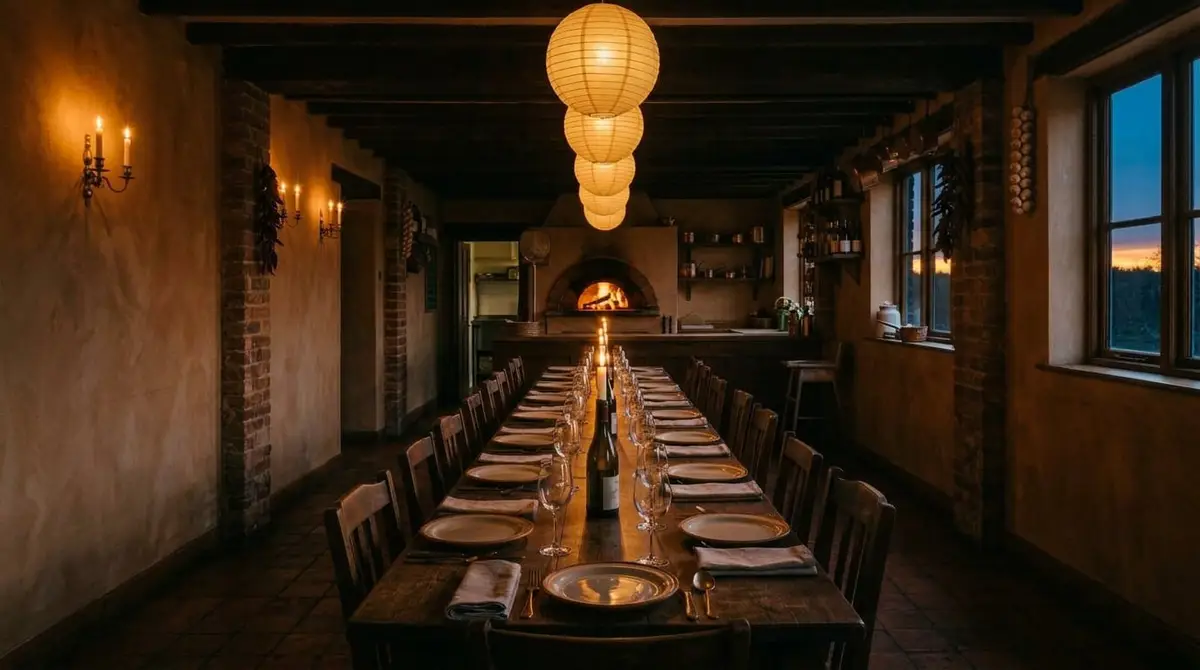
The guest’s side
Each page does one job a guest came to do, in a way that feels like this trattoria and not a template.
- HomeA meal, in scroll.The home page is one evening at the trattoria. Scroll and you walk in from the street at dusk, sit down, and the courses arrive one after another.
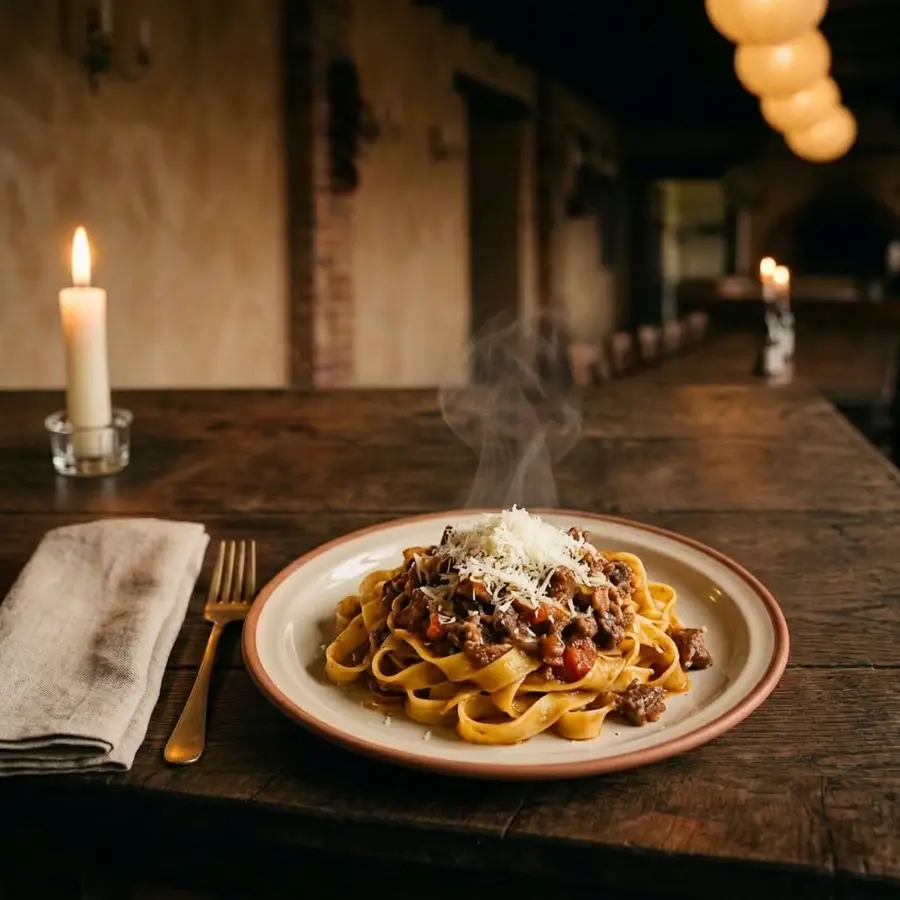
- MenuA menu that knows what’s left.Filters for vegetarian, gluten-free and the rest. Tap a dish for its photo. When the kitchen runs out of something, it says so on the menu.
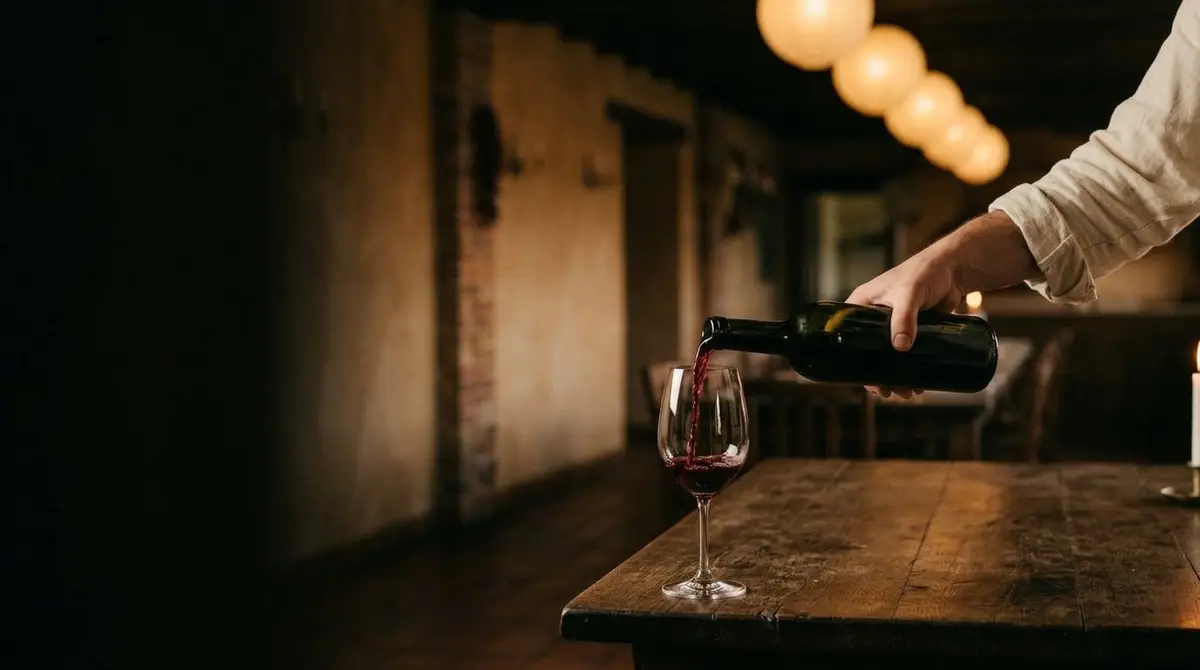
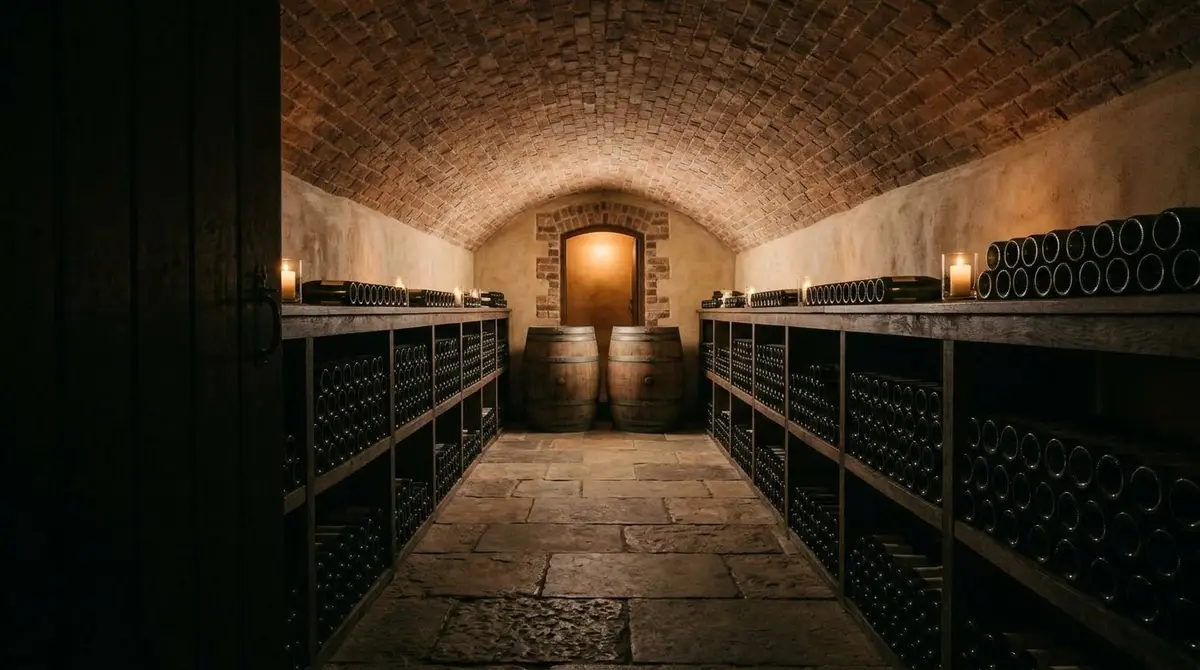
- CellarPick a wine, watch it pour.The wine list is a cellar with a pour scene, and a pairing picker that suggests a bottle for what you’re eating.
- ReserveA request slip.Pick a date, a time, how many and where to sit. The times come from the real opening hours, so closed days and holidays can’t be picked.
- VisitOpen now, or not.A sign on the door that flips to open or closed by the actual hours and closures, plus the map and the hours written out.
- GalleryPhotos on a line.Pictures of the room, the kitchen, the cellar and the table, hung on a clothesline you can walk along.
On a phone it behaves like an app: a tab bar at the bottom with Reserve raised in the middle, and the Call button always at the top.
The owner’s side
The owner signs in at /admin with a link sent to their email: no password to forget. The jobs that come up every week each take a tap or two. Tap through the tabs:
New requests, whether the kitchen is open right now, how many dishes are sold out and the next closure. The one-line specials banner and the order and booking links live here too.
The tab names and what they do, from the real back office. Try the real thing below; nothing you do there is saved.
Open the back office in a sandbox beside the live site. Mark a dish sold out, post tonight’s special and close for a holiday, and watch the site change.
Try the admin (opens in a new tab)What’s underneath
- Its own database, rules and photo storage. Each restaurant’s menu, hours and requests are kept apart from everyone else’s. Guests can read what’s published and nothing more; only the owner’s sign-in can change it.
- Google gets the same hours. The site describes the restaurant, its hours, holiday closures and menu in the format Google reads, so a closure added on the phone is in the page Google sees.
- Spam stays out of the inbox. Forms filled in too fast, stuffed with links or sent again and again are dropped quietly, before they reach the owner.
- The site never shows an error to a guest. If the database can’t be reached, it falls back to a saved copy of the menu and hours.
A real restaurant
The back office stays the same; everything a guest sees becomes yours.
- Your menu, hours and wines go in from the start. You send them once, in writing, and the site and back office are set up with them already in.
- Your photos, not AI ones. Every picture in the demo is made with AI so no real restaurant’s food is passed off. Yours uses your room and your plates; a shot list says which photos the site needs.
- Your own look and your own scroll. Cinque Lune walks you through an evening. Yours gets its own idea, tied to your place.
- A guide for your phone. When it launches you get a short guide to the back office with the real button names.
Your restaurant, next.
Tell me about the place in a few lines. I reply in writing by the next business day.